Building Around Geno Smith While Finding the Quarterback of the Future
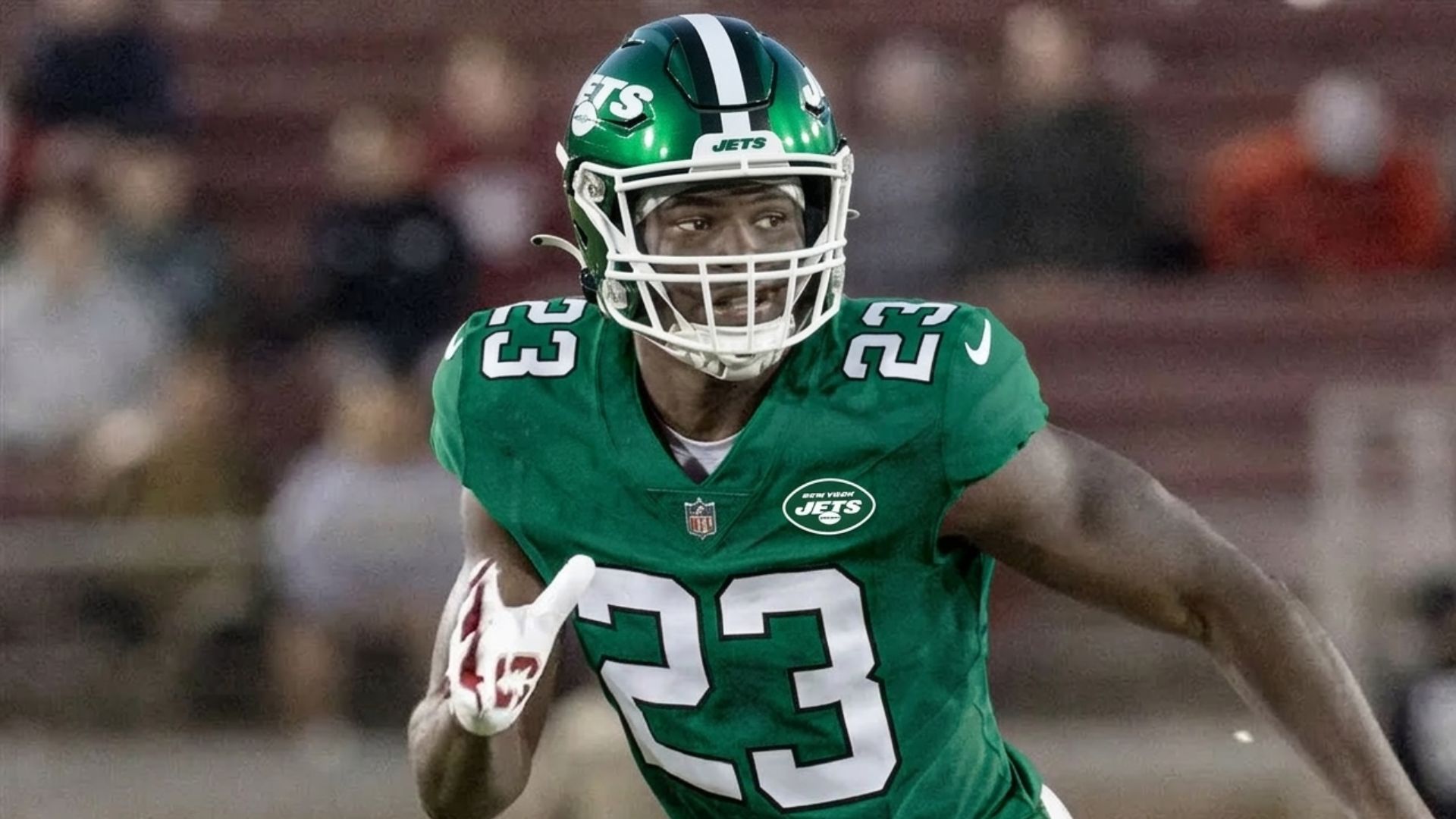
The New York Jets entered the 2026 offseason knowing they had to reshape their roster while staying competitive in the AFC. The biggest move came at quarterback when the Jets acquired Geno Smith in a trade with the Las Vegas Raiders. Smith gives New York a proven veteran capable of stabilizing the offense while the franchise continues its long-term search for the next face of the organization.
The Jets also made several key roster moves across the board. Breece Hall received the franchise tag, keeping one of the league’s most dynamic backs in green and white. On defense, the Jets made major additions including Minkah Fitzpatrick, Demario Davis, and T’Vondre Sweat, while also bringing back players like Mykal Walker and Andre Cisco.
With a veteran quarterback in place and a defense that added several experienced playmakers, the Jets can approach the draft with flexibility rather than desperation. That mindset allows them to attack value, upside, and long-term roster construction.
Here is how a full seven-round mock draft could play out for New York.
Round 1, Pick 2
New York Jets — David Bailey, EDGE, Texas Tech
Rationale:
If there were a quarterback worthy of the No. 2 overall selection, the Jets would have considered it. But in this scenario there simply was not one that matched the value of the pick. Instead, New York takes a swing on one of the most physically gifted defenders in the entire class.
Bailey is an uber-productive pass rusher who shocked evaluators by running a 4.5-second 40-yard dash at his size. That type of explosiveness at the edge position is rare. When you combine elite athletic traits with production, it creates the type of prospect teams are willing to gamble on near the top of the draft.
Bailey gives the Jets another disruptive pass rusher who can attack quarterbacks immediately while the rest of the defense continues to evolve around the new additions they made in free agency.
Jordyn Tyson’s film is insane. Elite WR traits everywhere.
— Frankie V (@FrankieVitz) January 15, 2026
If not for injuries, I wouldn't even think twice about the @nyjets drafting him 2nd. pic.twitter.com/Y0dZlS1NYZ
Round 1, Pick 16
New York Jets — Jordyn Tyson, WR, Arizona State
Rationale:
Sometimes the draft falls perfectly, and that is exactly what happens here.
Tyson was widely viewed as one of the top wide receivers in the class, but injury concerns prevented him from fully showcasing his talents during the pre-draft process. That slide becomes a massive gift for the Jets.
Tyson is an alpha receiver with the ability to dominate outside. Pairing him with Garrett Wilson immediately gives the Jets one of the most dangerous young receiving duos in football. Wilson thrives as a dynamic route runner and separator, while Tyson brings physicality and playmaking ability.
Together, they create a nightmare for opposing secondaries.
Ty Simpson's entire throwing session from the NFL combine. What do you notice?pic.twitter.com/FBRNtahgPq
— Dov Kleiman (@NFL_DovKleiman) March 1, 2026
Round 2, Pick 33
New York Jets — Ty Simpson, QB, Alabama
Rationale:
Patience pays off.
Instead of forcing a quarterback at No. 2 overall, the Jets allow the board to develop and land their quarterback of the future early in the second round.
Simpson will not need to start immediately because Geno Smith is firmly in control of the offense. That situation allows Simpson to develop properly without the pressure that often ruins young quarterbacks.
If Simpson becomes the long-term answer, the Jets solved their quarterback problem with tremendous value. If not, New York still has significant draft capital next year to take another swing.
That flexibility makes this pick extremely smart roster management.
In @FieldYates first mock draft of the offseason, he has the #Vikings selecting South Carolina CB Brandon Cisse 18th overall. pic.twitter.com/6MKFRAIsPn
— VikingzFanPage (@vikingzfanpage) February 11, 2026
Round 2, Pick 44
New York Jets — Brandon Cisse, CB, South Carolina
Rationale:
Replacing a superstar cornerback is never easy. Players like Sauce Gardner do not grow on trees.
But recent Super Bowl contenders have shown that you do not necessarily need multiple elite corners. Often one lockdown star paired with a strong CB2 is enough.
Cisse has legitimate stud potential. His ceiling is that of a high-level starter, while his floor is a dependable CB2. That combination makes him a worthwhile risk in the second round.
Michael Trigg (6’4 240) Baylor
— Bengals & Brews (@BengalsBrews) March 7, 2026
+ Elite hand size and strength
+ Can gain some yards after catch with a strong lower body
+ Impressive ball skills with several highlight reel catches
+ Career best 694 yards and 6 touchdowns in 2025
+ Alignment versatility
+ 2.18 yards per route… pic.twitter.com/7Xv1Hdj9wf
Round 4, Pick 103
New York Jets — Michael Trigg, TE, Baylor
Rationale:
Sometimes a team just needs a dog at tight end.
Michael Trigg brings attitude, confidence, and natural ball skills to the position. He plays with a physical edge and competes aggressively for the football.
That mentality fits perfectly with the identity the Jets appear to be building on offense.
We have to stop sleeping on Cincinnati WR Jeff Caldwell. We have to stop. A consensus UDFA? Joke.
— Clint Goss (@NFLDraftDome) February 28, 2026
Best route runner at the Senior Bowl & hammering a 4.32 40 at the NFL Combine
Height: 6'5"
Weight: 216
Arm Length: 32 5/8"
Hand Size: 9 3/4"pic.twitter.com/x8uoNlcb1b
Round 5, Pick 175
New York Jets — Jeff Caldwell, WR, Cincinnati
Rationale:
Adding speed at the wide receiver position always makes sense.
Caldwell brings legitimate deep-threat ability that can stretch defenses vertically. As a WR3 or WR4, he provides valuable depth while also offering potential as a return specialist.
Explosive role players like Caldwell can quietly become important pieces of an offense.
Round 5, Pick 178
New York Jets — Kaelon Black, RB, Indiana
Rationale:
Behind Breece Hall the Jets still need a running back capable of breaking out if called upon.
Black showed flashes during the regular season but truly exploded when his team needed him most during the playoffs. That late surge demonstrated the type of upside teams look for in mid-round backs.
He provides depth now and potential for more later.
Round 6, Pick 181
New York Jets — Harold Perkins Jr., LB, LSU
Rationale:
Perkins is one of the most intriguing players in this range of the draft.
At times during his career at LSU he looked like a future star. At other times his production fluctuated. However, he impressed evaluators at the East-West Shrine Bowl and reminded scouts of his elite athletic potential.
Perkins can rush the passer or operate as an off-ball linebacker, giving the Jets versatility on defense. At this stage of the draft he could easily become one of the biggest steals.
Round 7, Pick 219
New York Jets — Vincent Anthony Jr., EDGE, Duke
Rationale:
Late-round edge rushers are often selected based on measurable traits rather than polish.
Anthony fits that mold perfectly. The Duke product is a massive defensive end with the size and physical profile that teams love to develop. His tools alone justify taking a chance here.
Round 7, Pick 242
New York Jets — Sawyer Robertson, QB, Baylor
Rationale:
The Jets probably will not make all ten selections in the real draft, but in this mock they do.
With uncertainty at quarterback beyond Geno Smith, taking multiple swings at the position is smart strategy. Robertson impressed during Senior Bowl week and demonstrated the ability to command an offense.
At minimum he projects as a reliable backup quarterback, which has real value in today’s NFL.
Final Thoughts
This draft strategy reflects a balanced approach by the Jets.
They add an elite defensive athlete early, strengthen their receiving corps, secure a developmental quarterback, and continue building depth across the roster.
Most importantly, the Jets avoid the mistake of forcing a quarterback too early. Instead, they allow the board to come to them while still addressing the future of the position.
If several of these players reach their potential, the Jets could walk away from the 2026 draft with the foundation of their next contender.