THIS was the moment I knew the 2-0 Saints of 2024 were finished.
And most people don’t even remember it.
For two weeks the New Orleans Saints had the entire NFL in chaos. Klint Kubiak arrived as offensive coordinator and immediately unleashed an offense that looked like the next evolution of the system New Orleans had been building since the Sean Payton years.
Week 1? The Saints beat the living daylights out of the Panthers.
Week 2? They marched into Dallas and beat the brakes off the Cowboys.
That was the game that made the football world stop and pay attention.
Derek Carr was dancing in the end zone doing the Michael Jackson celebration. Dennis Allen went viral in the locker room telling the team, “Sometimes you gotta pop out and show ’em.” Saints fans were celebrating in Dallas like the Lombardi Trophy had just been delivered.
For two weeks the Saints looked unstoppable.
The offense was explosive. The motion, the play action, the spacing, the timing. It all looked like the next great offensive machine in the NFL.
Then something happened that most fans overlooked.
The greatest defensive mind in football history ended up on television.
Bill Belichick.
After leaving the Patriots, the six time Super Bowl winning head coach spent time analyzing the game publicly instead of coaching. Belichick is widely considered one of the greatest coaches ever and holds the record for the most Super Bowl wins by a head coach.
And during one segment, Belichick did something devastating for the Saints.
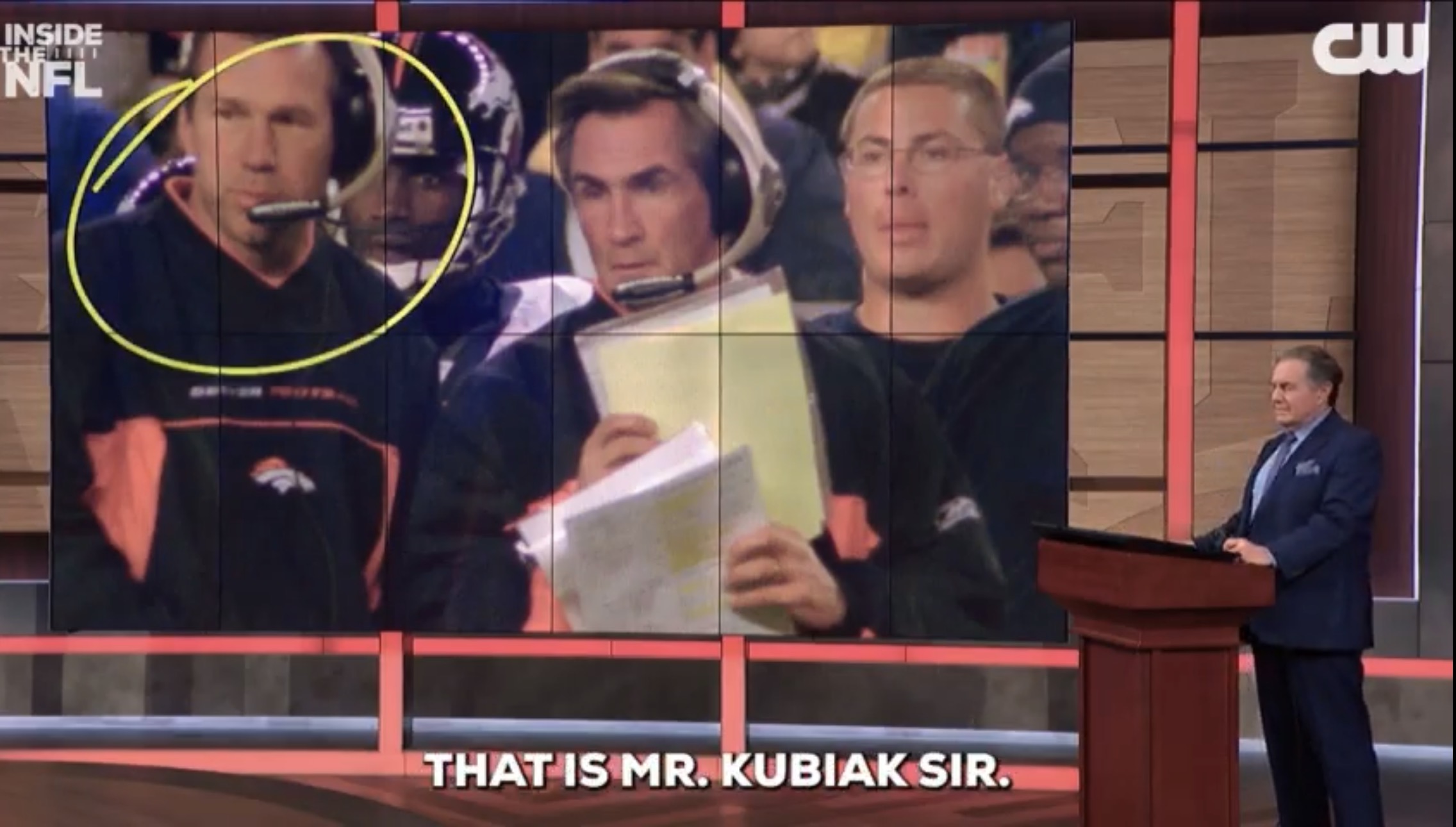
He broke down the Kubiak offense.
Not casually.
He explained exactly how the system works. The play action structure. The spacing rules. The timing. The ways defenses could compress the field and disrupt the reads.
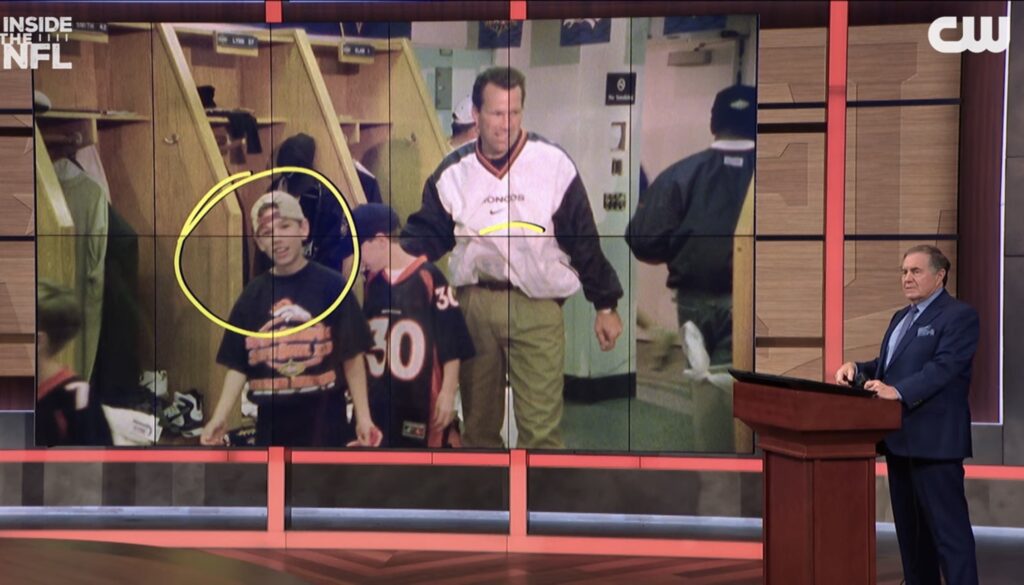
It was a coaching clinic broadcast to the entire league. He even showed pictures of Klint Kubiak as a kid and a teenager learning from his Dad while his Dad helped the Shanahan lineage.
The following week the Saints faced Philadelphia at home.
The Eagles rolled out a defensive plan that they hadn’t played all season. It mirrored the exact ideas Belichick had just discussed publicly. They put more people on the line of scrimmage to do exactly what Bill said in setting the edge and shutting down the run.
At first the Saints still looked dangerous. They came out hot and moved the ball early.
But then the adjustments started working.
Running lanes tightened. The rhythm slowed. The offense stalled.
Then the injuries began.
Taysom Hill went down.
But the biggest loss was Erik McCoy, the center and leader of the offensive line. When McCoy left the game, the entire structure of the offense collapsed. Without the protection calls and communication up front, Derek Carr suddenly looked like a quarterback trying to operate a machine that had lost its gears.
The Saints lost that game.
But the real damage happened afterward.
The blueprint was out.
Every defense after that attacked the Saints in a similar way Philadelphia did. The explosive offense disappeared. The injuries kept piling up. Klint wasn’t really at the stage in his development where he could make great offensive adjustments once Plan A was stopped. That issue came up game after game for the Saints. Eventually the pressure swallowed Derek Carr and the Saints season spiraled out of control.
After starting 2-0 and looking unstoppable, New Orleans lost seven straight games.
One of the hottest starts in franchise history turned into one of the most frustrating seasons in recent memory.
And when you trace the collapse back to the exact moment it began, it wasn’t just the Eagles game.
It was the moment before it.
The night Bill Belichick went on television and explained exactly how to stop the Saints offense.
That breakdown didn’t just analyze a scheme.
It ended the illusion that the Saints had discovered something the rest of the league couldn’t solve.
And in many ways, that moment marked the true end of the Dennis Allen Era in New Orleans.
Later that season, the fallout from that collapse reached the coaching staff.
Dennis Allen, a holdover from the Sean Payton era, was fired after the Saints’ season spiraled out of control. Allen had been part of the organization through the Payton years and eventually took over as head coach, but the losing streak and the frustration surrounding the team made a change inevitable.
The Saints turned to another familiar face from the Payton tree.
Special teams coordinator Darren Rizzi was promoted to interim head coach. Rizzi brought energy and stability to a locker room that had been shaken by the midseason collapse. By most accounts, he did a respectable job steadying the team during the chaos of the season’s final stretch.
But the organization had already begun thinking about the future.
When the season ended, the Saints made it clear they were moving in a different direction. Klint Kubiak was let go and soon landed with the Seattle Seahawks as their offensive coordinator. Darren Rizzi, despite his work as interim head coach, was informed that he would not be the head coach moving forward.
With Rizzi’s departure, the final piece of the Sean Payton coaching imprint in New Orleans was gone.
An era had officially ended.
Ironically, the men who left New Orleans went on to find success elsewhere. The following season Dennis Allen resurfaced as a defensive coordinator and led the Chicago Bears on an impressive playoff run. Klint Kubiak found himself on the biggest stage in football, helping guide the Seattle Seahawks offense to a Super Bowl championship as their offensive coordinator.
Meanwhile in New Orleans, the franchise began writing a completely new chapter.
Saints fans were not sitting around mourning the past. The end of the post Sean Payton era marked the beginning of something entirely new: the Kellen Moore era.
Moore arrived with a fresh offensive vision and a completely different philosophy about how the Saints should build their roster and identity.
One of the first defining moments of that new era came in the 2025 NFL Draft.
With their second round pick, the Saints selected quarterback Tyler Shough.
The reaction from fans was mixed at best. Many Saints fans were confused by the pick. Some were flat out angry. At the time, Shough did not look like the savior of the franchise.
To make matters even more uncertain, Shough lost the training camp battle for the starting job.
But by the end of the season, the story had completely changed.
Shough steadily grew into the role and eventually became the face of a rookie class that electrified New Orleans. The Saints’ 2025 draft group was widely recognized as the best draft class in the NFL that season, and Shough emerged as the centerpiece of that success.
What began with skepticism ended with hope.
And in a city that had spent years trying to recapture the magic of the Drew Brees era, hope meant everything.
So while the Sean Payton era may have officially closed, a new story is just beginning.
The Kellen Moore and Tyler Shough era in New Orleans is only getting started.
And Saints fans everywhere are hoping it becomes every bit as magical as the one that came before it with Sean Payton and Drew Brees.