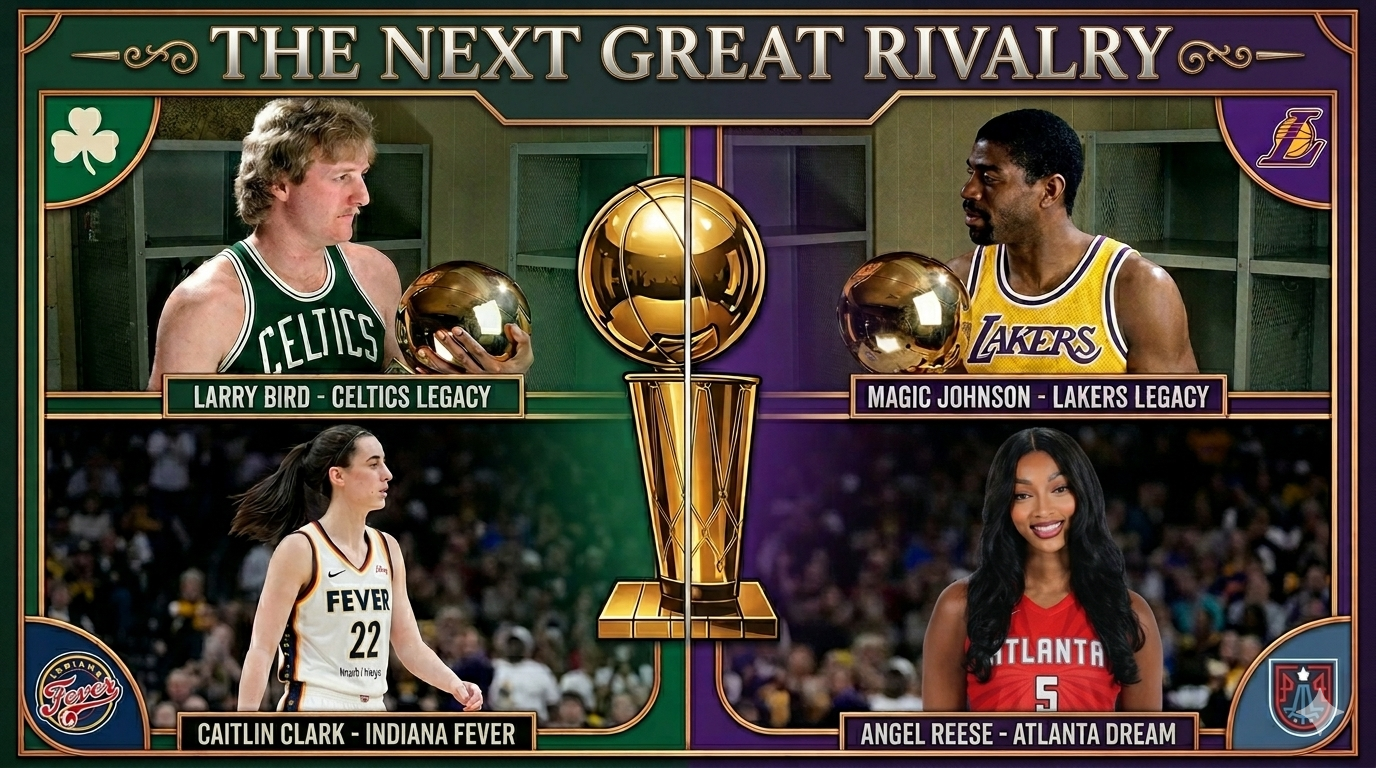
Magic Johnson vs. Larry Bird took the NBA from the brink of bankruptcy to the nation’s most talked-about sport. Now, sports fans have witnessed something remarkably similar happen in the WNBA over the past three years.
Once one of the most overlooked sports of the late spring and summer, women’s basketball has exploded in popularity. The game has grown so much that there is now a profitable second women’s basketball league with television deals and a growing fan base. For a long time in America, women’s basketball simply was not a major draw. Then a college basketball rivalry changed everything. The similarities between what happened in the NBA decades ago and what is happening in the WNBA today are remarkable.
The @IndianaFever vs. @chicagosky games in the WNBA have drawn huge attention with sold-out arenas and electric atmosphere, marking a pivotal moment for the league's future.
— Sports Business Journal (@SBJ) June 25, 2024
National TV coverage on #ESPN promises high ratings in a standout season.https://t.co/T4o5F5Yeqp
In the NBA, as mentioned earlier, public interest in the league had faded. Young fans were not watching or talking about it the way they once had. That changed with a college rivalry that culminated in the 1979 National Collegiate Basketball Championship: Larry Bird’s undefeated 33–0 Indiana State team versus Ervin “Magic” Johnson and Michigan State.
Magic Johnson vs. Larry Bird with a national title on the line 🍿
— NCAA March Madness (@MarchMadnessMBB) March 26, 2026
On this day in 1979, @MagicJohnson and @MSU_Basketball took down Larry Legend's Indiana State team to win the #NationalChampionship 🤩#MarchMadness pic.twitter.com/QFtbNkY5fP
That game had the entire country buzzing.
One of the reasons was simple. In basketball, White America suddenly had a player many felt they could fully rally behind. Larry Bird represented that “Great White Hope” narrative. Magic Johnson was not quite the villain many stories require, but he was the powerful opposing force standing in the way of Bird achieving perfection. At the same time, much of Black America was rooting for Magic.
At the core of American history is race. It is uncomfortable, but it is real. The divide between Black and White America has often shown itself in very public ways. It was visible during the O.J. Simpson trial, where reactions to the verdict often broke along racial lines. It is visible in modern political divides as well. In that moment in 1979, the lines were clear. Black America had its guy. White America had its guy.
And just like in the O.J. Simpson trial years later, and like the Angel Reese–Caitlin Clark rivalry in college basketball, Black America won.
Most people think March Madness was always huge.
— Fastbreak Hoops (@FastbreakHoops5) March 27, 2026
It wasn’t.
One game changed everything.
Bird vs. Magic in 1979 pulled a TV number so big it forced the sports world to take the tournament seriously.
The Defining Moment. Subscribe here:https://t.co/7zNhrqgeCU
But the rivalry was only beginning. Both players were headed to the NBA, and the country suddenly had a storyline that could continue on the professional stage.
Bird joined a Boston Celtics franchise with a deep championship tradition and a city that adored its team. Magic Johnson joined the Los Angeles Lakers, a franchise that had been close to winning many times but had struggled to break through. The city did not love the team in quite the same way Boston loved the Celtics, but there was already history between Boston and Los Angeles.
The Celtics and Lakers had met for championships before, and the possibility of a Magic vs. Bird rematch with titles on the line added fuel to the fire early in their careers. When Magic won a championship in his rookie season, the anticipation only grew stronger. A few years later, America finally got the showdown it wanted.
And the country could not get enough of it.
That rivalry helped turn the NBA into must-watch television.
"It's about that white player and that black player. … It started with [Larry] Bird vs. Magic [Johnson]. … [That rivalry] contributed to elevate the popularity. So Angel Reese and Caitlin Clark: Embrace this. It's okay."
— ClutchPoints (@ClutchPoints) May 19, 2025
—Stephen A. Smithpic.twitter.com/EWMpIKdLqL
Angel Reese and Caitlin Clark share a similar origin story.
Their rivalry began in college with LSU vs. Iowa. Caitlin Clark had the overwhelming support of White America. Angel Reese had the overwhelming support of Black America. LSU won the championship, but Angel did something Magic never fully embraced. She became the perfect villain.
Three years ago today, LSU took down Iowa to win the national championship and Angel Reese made sure everyone knew it 😏💍 pic.twitter.com/DL9G7w0W5T
— Yahoo Sports (@YahooSports) April 2, 2026
Her iconic stare-down and ring-finger gesture toward Caitlin Clark, combined with the John Cena “You can’t see me” taunt, enraged Clark’s fan base to a point of no return.
For the WNBA, the timing was perfect. There is very little time between the end of the women’s college basketball season and the WNBA draft. Almost immediately, the public’s attention shifted to the WNBA, where everyone expected the rivalry to continue.
And it did.
Social media exploded with debates about playing style, officiating, and how WNBA players were defending Caitlin Clark, who many fans viewed as America’s newest basketball sweetheart. When Angel Reese and Caitlin Clark met for the first time in the league, it felt like the entire country was watching.
"Before these two girls. The views wasn't where they were… This is why we’re watching [the WNBA], this is why social media is good, you’re either going to welcome us or not.”
— ClutchPoints (@ClutchPoints) July 10, 2025
Gilbert Arenas on Caitlin Clark and Angel Reese 🗣️
(via @GilsArenaShow)pic.twitter.com/MqtuFh8pp6
They did not disappoint.
The game was intense. There were hard fouls, hip checks, and clear signs that the rivalry was real and deeply competitive.
Throughout that first WNBA season featuring Angel Reese and Caitlin Clark, the league experienced massive growth. Television ratings increased. Media coverage increased. Social media conversations exploded. New podcasts appeared. And many people discovered something important: the WNBA actually has an outstanding basketball product, even beyond the two players who initially drew them in.
The league leaned into the rivalry by placing their matchups in prime broadcast windows.
However, something changed in Year 2.
There was no real competitive balance between their teams. The Indiana Fever blew through the Chicago Sky like a blistering wind, offering little resistance. Each meeting felt less dramatic because the Sky simply could not compete, especially after losing one of their key stars from the previous season, Chennedy Carter.
The rivalry lost steam. It lost even more momentum when both Angel Reese and Caitlin Clark suffered significant injuries that prevented them from finishing the season.
While that rivalry cooled slightly, another one began to form.
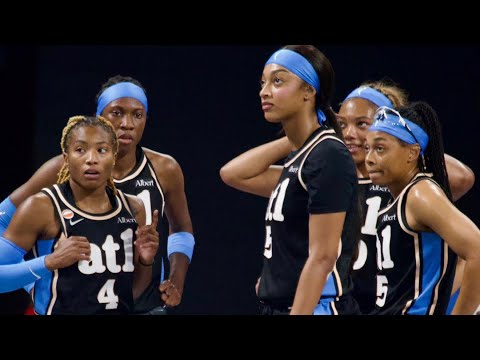
The Atlanta Dream and the Indiana Fever.
Early in the season, the teams played several games against each other within the first few weeks. Every matchup felt intense. Caitlin Clark’s presence alone forced Atlanta to move games from their usual home at the smaller Gateway Center Arena to State Farm Arena, home of the Atlanta Hawks.
The games were explosive.
Dream star Rhyne Howard got into a highly publicized altercation with Caitlin Clark, during which Clark could be heard shouting, “I ain’t scared of you.” Dream center Brittney Griner was accused of saying “f***ing white girl” after she was ejected following a run-in with the Fever. Every matchup felt personal.
Clark only made matters worse when she said, “I’ve never lost here in Atlanta.”
Meanwhile, the Dream never fully appreciated Atlanta fans packing arenas primarily to see visiting stars.
The rivalry was already intense when the playoffs arrived.
After a historic Dream season that produced the most wins in franchise history and the number two seed in the WNBA playoffs, Atlanta faced the Indiana Fever in the first round. The Fever entered the series without Caitlin Clark and several other starters and lost Game 1.
Most people believed the Dream would easily eliminate the severely shorthanded Fever and move on to tougher competition in Round 2.
That did not happen.
After stealing Game 2 in Indiana, the makeshift Fever squad walked into a packed Gateway Center Arena and stunned Atlanta with an upset victory on the Dream’s home floor.
THE FEVER DREAM IS OVER! INDY MOVES ON! 🙌🔥
— TSN (@TSN_Sports) September 19, 2025
Kelsey Mitchell came up CLUTCH for the Fever in an 87-85 nailbiter vs. Atlanta! Indiana will face the winner of Las Vegas vs. Seattle. 👀 pic.twitter.com/wac00YIqoh
After the game, Fever players were heard shouting, “ATL what? ATL my a**,” mocking the chants Dream fans had been yelling during the series.
The rivalry ended on a bitter note for Atlanta.
Until about a week ago, two things were true.
The Caitlin Clark vs. Angel Reese rivalry had cooled. And the Indiana Fever seemed to consistently get the better of the Atlanta Dream.
Then one move changed everything.
The Atlanta Dream traded for Angel Reese.
The move sent shockwaves through Atlanta. Ticket prices immediately surged, and Angel Reese Atlanta Dream jerseys sold out within hours. Social media exploded with excitement, and Reese’s fan base made it clear just how much support she has.
Suddenly, the Magic vs. Bird comparison feels alive again.
Angel Reese now has a supporting cast capable of competing at a high level. Caitlin Clark is already on a team with championship aspirations and a coaching staff that believes it can contend for a title.
The Robin Lundberg Show:
— Caitlin Clark News (@22CCnews) April 6, 2026
Fever vs Dream Just Became THE WNBA Rivalry
Robin reacts to the Indiana Fever having frequent matchups with the Atlanta Dream.
Robin Lundberg analyzes how the upcoming WNBA schedule sets the stage for a compelling new rivalry between the Indiana Fever… pic.twitter.com/tDFyiMq7FY
Now when the two meet, the games will carry real stakes.
There is a legitimate possibility that the two could meet with a championship, or something equally significant, on the line. That possibility changes everything and keeps the WNBA firmly in the national spotlight.
And do not worry about the rivalry cooling simply because they played together on the same team in FIBA competition this summer.
Magic Johnson and Larry Bird did the same thing before their rivalry reached its peak.
It did not matter.
Competitors compete.
And Angel Reese and Caitlin Clark both want the same thing: greatness.
Now they stand firmly in each other’s way.