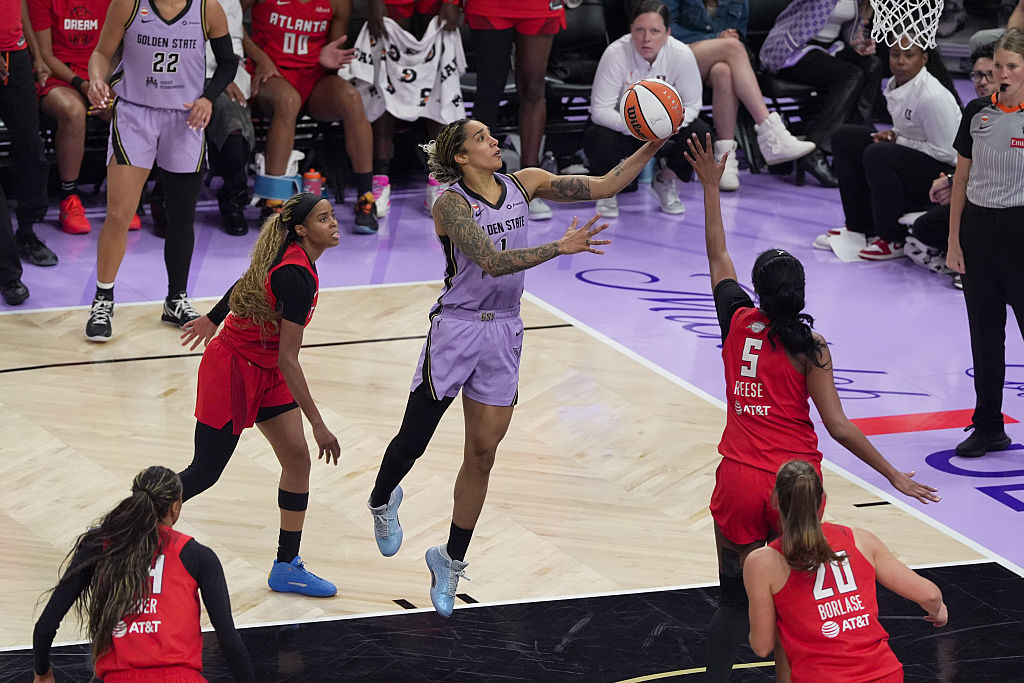
The WNBA has officially entered a new era, and make no mistake about it, this is one of the most important moments in the history of women’s professional sports. The newly agreed-upon Collective Bargaining Agreement between the league and the WNBPA is not just an update. This is a statement.
This is what happens when growth meets leverage.
WNBA and WNBPA officially announce tentative agreement on a new 7-year CBA.
— Underdog WNBA (@UnderdogWNBA) March 20, 2026
Details: pic.twitter.com/pttYkth1bb
For years, the WNBA has been building momentum. From the rise in global stars to the explosion of media coverage, jersey sales, and viewership, the value of the league has never been more visible. And now, for the first time, the players are positioned to directly benefit from that growth through a true revenue-sharing model. That alone shifts the entire power dynamic of the league moving forward.
At the center of this agreement is money, and rightfully so.
The salary cap is set to jump to $7 million in 2026 and is projected to exceed $11 million by 2032. That kind of growth is not just incremental. It is transformational. Max salaries will reach $1.4 million immediately and could climb to $2.4 million, while average salaries are expected to cross the $1 million mark. Even the minimum salary is seeing a substantial rise, creating a stronger financial floor for every player in the league.
This is how you build sustainability.
But the CBA is not just about salaries. It is about quality of life.
For the first time, players will see widespread access to league-provided housing and full charter flights. That cannot be overstated. Travel has long been one of the most talked-about issues in the WNBA, and this move immediately brings the league closer to the standards seen in other professional sports. Add in improved facilities, expanded medical and training staff, and increased investment in nutrition and recovery, and you begin to see a league that is finally matching its infrastructure to its talent.
And then there are the benefits.
Enhanced retirement contributions, life insurance policies exceeding $700,000, expanded mental health support, and family planning benefits all signal a deeper understanding of what players actually need both on and off the court. The inclusion of recognition payments for retired players also shows respect for the pioneers who built the league into what it is today.
Caitlin Clark is making over 6.7x as much money this year with the new WNBA CBA 😤 pic.twitter.com/DuD6QLyDOh
— Underdog (@Underdog) March 20, 2026
The bonuses tell another story.
From MVP to All-Star appearances to championship runs, the financial rewards for excellence have increased across the board. A WNBA champion will now earn $60,000 per player, and MVP honors come with the same payout. These numbers are not just symbolic. They reinforce that elite performance should come with elite compensation. Even more important, these bonuses will continue to grow alongside the salary cap starting in 2027.
WNBPA president Nneka Ogwumike explains the system the players are using to determine how much they should be paid. pic.twitter.com/jkkwfiuk2H
— No Cap Space WBB (@NoCapSpaceWBB) July 20, 2025
That means this deal is built for the future, not just the present.
Roster construction changes also bring a new level of strategy to the league. Teams will now carry 12 players, with additional developmental spots that do not count against the cap. Restrictions on Core Player designations and new injury exceptions give teams more flexibility while also protecting player mobility and opportunity.
And then there is one of the most important aspects of all: player protection.
The inclusion of pregnancy-related policies, including requiring player consent before trading a pregnant player, represents a major step forward in prioritizing the well-being and dignity of athletes.
Put it all together, and this CBA is more than a win. It is a blueprint.
our 2026 schedule is here 👀
— Indiana Fever (@IndianaFever) January 21, 2026
learn more: https://t.co/cwfVcX3yrI pic.twitter.com/JmgP2ueDt3
The WNBA is no longer just fighting for recognition. It is operating from a position of strength. With stars driving culture, fans driving revenue, and players now sharing in that success, the league is positioned for sustained, long-term growth.
This moment proves something that has been building for years.
The women of the WNBA are not just part of the sports landscape. They are helping redefine it.